


Rhode Island Search and Seizure Laws: Complete Guide 2026
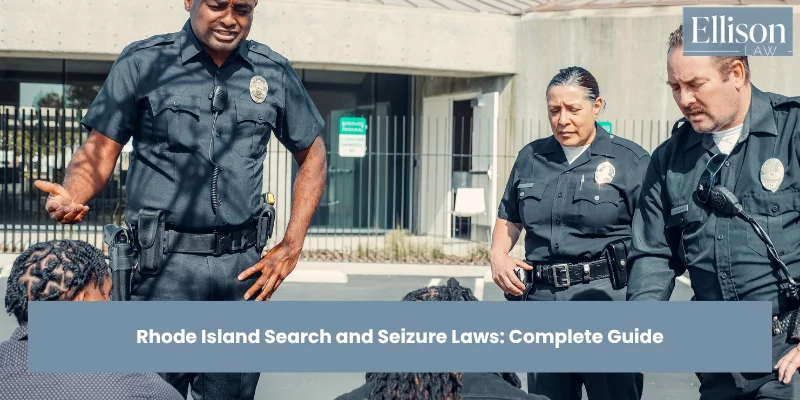
Many people would probably agree that having their vehicle stopped and searched by the police, or being the subject of a home investigation, can be nerve-wracking situations. If you’re worried about not just your criminal record but also your individual privacy, you could benefit from consulting a lawyer who can answer all your questions. If you need to know more about Rhode Island search and seizure laws, specifically, Ellison Law LLC can explain them in detail.
A qualified Rhode Island search and seizure attorney from our office can go over when and how police can inspect property, vehicles, or personal belongings to get evidence. Rhode Island follows state and federal constitutional standards, which define the boundaries of lawful police conduct and citizens’ rights. Knowing these protections can be critical for your case.
What Search and Seizure Means in Rhode Island
Search and seizure refers to the process by which police investigate potential crimes by examining property or confiscating evidence. Under the Fourth Amendment and Article I, Section 6 of the Rhode Island Constitution, individuals are protected against unreasonable searches and seizures. This means that, before officers can conduct a search, they must have:
- A valid warrant
- Probable cause
- Consent
Understanding these nuances can help you recognize when you may have been subjected to an illegal search, in which your rights were violated.
The Legal Framework Behind Search and Seizure
Rhode Island’s approach to search and seizure is shaped by both federal precedent and local interpretation. The state’s courts often reference landmark U.S. Supreme Court cases like Mapp v. Ohio and Terry v. Ohio, but they also apply Rhode Island‑specific standards that reflect local enforcement realities.
In 2022, 27% of people were serving time in prison for a drug offense throughout Rhode Island. Consider that cases involving drugs, narcotics, firearms, and more often hinge on whether evidence was obtained legally. If a search is deemed unconstitutional, that evidence may be suppressed, meaning it can’t be used against the defendant.
Common Scenarios That Raise Search and Seizure Issues
Search and seizure disputes often come up in everyday situations, such as:
- Traffic stops: Officers are allowed to search a vehicle if they have probable cause to believe it contains contraband. However, opening a trunk or glove compartment without consent or cause can be challenged.
- Home searches: A warrant is typically required unless there’s an emergency or consent is given. Evidence obtained without proper authorization may be excluded.
- School and workplace searches: These settings involve different standards, often balancing institutional safety with individual rights.
Why Proper Procedure Matters
When police fail to follow proper procedure, the consequences can be serious, not just for defendants but also for the integrity of the justice system. Evidence obtained through an illegal search can be excluded under the “fruit of the poisonous tree” doctrine. This principle prevents prosecutors from using evidence derived from unconstitutional actions.
For Rhode Island residents, this means that even a minor procedural error could affect the outcome of a case. A skilled Rhode Island search and seizure attorney can identify these issues early and challenge improper evidence before trial.
When to Hire a Search and Seizure Lawyer
If your rights were violated during a police search, it’s crucial to hire a search and seizure lawyer who’s experienced in Rhode Island criminal defense. A search and seizure case often involves complex constitutional arguments, and it requires detailed knowledge of courtroom procedures, like those in the Providence County Superior Court at 250 Benefit Street in Providence. An attorney can:
- Review police reports and warrant documentation.
- File motions to suppress illegally obtained evidence.
- Represent you during hearings and negotiations.
- Protect your rights throughout the criminal process.
In Rhode Island, where the Criminal Division prosecuted 65 trials statewide in 2025, professional representation can be vital for having a sound defense strategy.
Why Choose Ellison Law LLC?
At Ellison Law LLC, our Rhode Island criminal defense team represents individuals facing serious charges across the state. Our attorneys have extensive experience in search and seizure cases, from challenging unlawful traffic stops to defending clients against evidence obtained without proper warrants. We emphasize transparency, education, and advocacy, along with enabling residents of the Ocean State to understand their rights and make informed decisions.
FAQs
What Qualifies as an Illegal Search and Seizure in Rhode Island?
A search and seizure in which law enforcement acts without a valid warrant, probable cause, or voluntary permission qualifies as an illegal search and seizure in Rhode Island. The courts in this state closely examine whether officers exceeded lawful boundaries. Evidence obtained through unconstitutional means may be suppressed, meaning prosecutors can’t use it against you in criminal proceedings.
What Are the Rules of Search and Seizure in Rhode Island?
The rules of search and seizure in Rhode Island are outlined in the Fourth Amendment and Rhode Island’s Constitution. These laws require warrants or recognized exceptions, such as consent, plain view, or exigent circumstances. Officers must follow strict procedures to protect privacy rights. When they fail to do so, defendants can challenge the evidence and seek the dismissal of any related charges.
Can You Refuse a Search and Seizure in Rhode Island?
You can refuse a search and seizure in Rhode Island if officers lack a warrant or probable cause. In Rhode Island, calmly stating that you don’t consent can preserve your rights. However, physically resisting can lead to additional charges. Always remain respectful, document the encounter, and contact a qualified attorney immediately afterward for guidance.
Can the Police Open Your Car Door During a Traffic Stop in Rhode Island?
The police can open your car door during a traffic stop in Rhode Island only under specific circumstances, such as probable cause, safety concerns, or consent. Without these, doing so could violate search and seizure protections. Rhode Island courts often closely scrutinize such actions, especially when evidence is obtained afterward. Your legal counsel can evaluate whether your rights were infringed.
Protect Your Rights in Rhode Island Today
Search and seizure laws are complex, but understanding them is key to protecting your freedom. Whether you’re facing charges or questioning police conduct, consulting a Rhode Island search and seizure lawyer can help you confidently navigate the legal process. If your rights were violated, contact Ellison Law LLC today to discuss your case and explore your options with a dedicated defense team.
Contact Us Today
Fields marked with an “*” are required
225 Dyer St 2nd Floor
Providence, RI 02903
Office Locations
161 S main St
Fall River, MA 02721

Providence Office
225 Dyer St 2nd Floor
Providence, RI 02903
Fall River Office
161 S main St
Fall River, MA 02721
Phone: 401-230-5520
Fax: 401-867-2950
Copyright © 2026 Ellison Law LLC. All rights reserved.
Digital Marketing By 
*Images are obtained under license from Canva and other third-party stock image providers, with attribution included where required.