


Rhode Island Concealed Carry Laws – Latest Updated
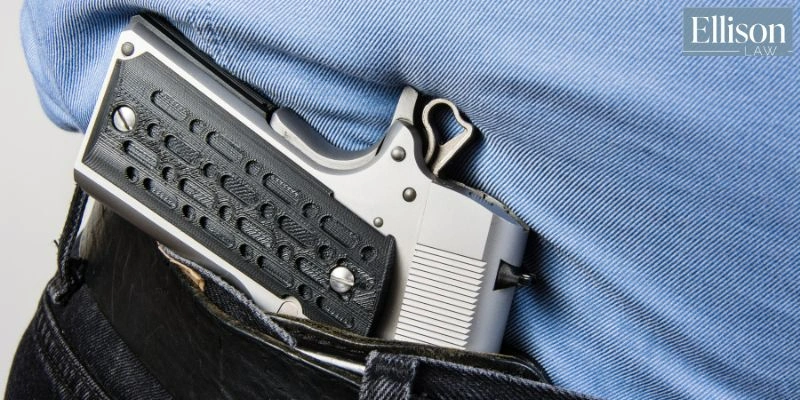
Rhode Island concealed carry laws represent some of the most complex and strict gun control laws in the US. Unlike most states, Rhode Island allows both the Attorney General and local agencies to issue gun permits, leading to differing standards. It’s important for citizens to understand the laws regarding firearm ownership and usage in Rhode Island.
At Ellison Law LLC, we understand your concerns around firearms laws and your questions about the right to carry a concealed weapon. If you have been accused of a crime involving a firearm or are facing charges for carrying a weapon illegally, you need legal representation. When you hire a gun crime lawyer from Ellison Law, we can help you understand your rights.
The Difference Between Shall-Issue and May-Issue Designations
In Rhode Island, the differences between gun permits and the application process for these permits depend on which authority is issuing the registration.
Shall-Issue permits for handguns are granted by local authorities, such as the sheriff’s department and police department. An applicant shall be issued a permit if they meet all requirements, including being 21 years of age or older, being a US citizen or legal resident, passing a background check, completing a mandatory gun safety training course, and undergoing a mental health evaluation. Applicants must provide all supporting documentation.
Three letters of reference from non-relatives may also be required to attest to the applicant’s character, and a hearing may also be necessary to approve the application.
May-Issue permits are granted by the attorney general of Rhode Island. All of the above requirements are also mandatory. The chief difference between the two types of permits is that in a may-issue permit, the attorney general has the right to deny the permit, even if the applicant qualifies.
The applicant may be required to provide a “proper showing of need” to demonstrate a valid reason for the concealed carry permit. The attorney general does not always require a hearing, but may require more documentation to establish qualification. The attorney general’s office is located in Providence, at 150 South Main Street. There are currently around 8,000 active concealed carry permits in the state.
Factors That Affect Permit Approval
If the applicant for a concealed carry permit does not provide the necessary documentation or demonstrate proficiency in the required gun safety testing criteria, their request for a permit may be denied. Other factors that can lead to a disqualification include:
- A history of domestic violence
- A felony conviction
- A history of drug addiction
- Habitual drunkenness
- Mental incompetence
- The party is subject to a restraining order
Many of these factors will show up on the mandatory background check required by both local and state agencies. Having a clean criminal record is a vital aspect of being approved for a concealed carry permit in Rhode Island. 60% of US adults support background checks, reflecting growing concerns over gun violence.
If you have been charged with a crime, it’s crucial to seek legal counsel from a lawyer to help protect your right to carry a concealed weapon, as well as other civil rights you may lose if convicted.
Renewal and Revocation of Permits
Concealed carry permits are valid for four years from the date of issuance and must be renewed before expiration. The renewal process is almost identical to the initial application process, requiring an updated background check, proof of residency and employment, and retaking qualifying tests for gun safety. If you are renewing through the attorney general’s office, you may be required to demonstrate “showing of need” again.
If the permit is not renewed by the expiration date, your right to carry is immediately revoked and will not be renewable. You will have to reapply for a new permit, as Rhode Island does not offer a grace period on renewals.
A permit can also be revoked if the holder of the permit is convicted of a felony, is issued a restraining order, or deemed mentally unstable. The attorney general can also revoke the permit if the holder is deemed a threat to public safety.
FAQs
Can You Conceal Carry in Rhode Island Without a Permit?
No, to carry a pistol or handgun, whether concealed or openly carried, you must obtain a permit from the Attorney General’s Office or local authorities. You must have a proper showing of need to qualify for a permit from the Attorney General, whereas local jurisdictions can issue a permit based on general qualifications.
Can You Openly Carry a Gun in Rhode Island?
Under R.I. Gen. Laws § 11-47-8, you can only open carry a handgun in any public place with a permit. These permits are rare and discretionary, and all requirements must be met. You are also not allowed to openly carry a loaded shotgun or rifle on Rhode Island roadways or public places.
Can You Have a Gun in Your Car in Rhode Island?
In Rhode Island, it is generally illegal to carry a loaded firearm in your vehicle. To legally transport a firearm, it must be unloaded and secured in storage. There are exceptions for law enforcement, hunters with lawful permits, and those with special, qualifying concealed carry permits. Violating these laws can result in severe penalties.
Can You Have 30-Round Mags in Rhode Island?
No, the state bans the possession, sale, transfer, or conveyance of large capacity magazines and feeding devices of over ten rounds of ammunition. Violations of this law may result in severe penalties, fines, and imprisonment. This law was enacted to prevent mass casualty gun violence. Bump-fire devices, binary triggers, trigger cranks, and any other methods of manual override are also prohibited by law.
Are You at Risk of Losing Your Concealed Carry Permit Due to Criminal Charges? Hire a Gun Crime Lawyer
At Ellison Law LLC, we have been serving the right-to-carry interests of Rhode Island citizens for decades. Our dedicated team of lawyers and legal professionals can answer all of your questions about the laws governing your concealed carry permit and how a criminal case could impact your right to carry. Contact us today to schedule your initial consultation.
Contact Us Today
Fields marked with an “*” are required
225 Dyer St 2nd Floor
Providence, RI 02903
Office Locations
161 S main St
Fall River, MA 02721

Providence Office
225 Dyer St 2nd Floor
Providence, RI 02903
Fall River Office
161 S main St
Fall River, MA 02721
Phone: 401-230-5520
Fax: 401-867-2950
Copyright © 2026 Ellison Law LLC. All rights reserved.
Digital Marketing By 
*Images are obtained under license from Canva and other third-party stock image providers, with attribution included where required.